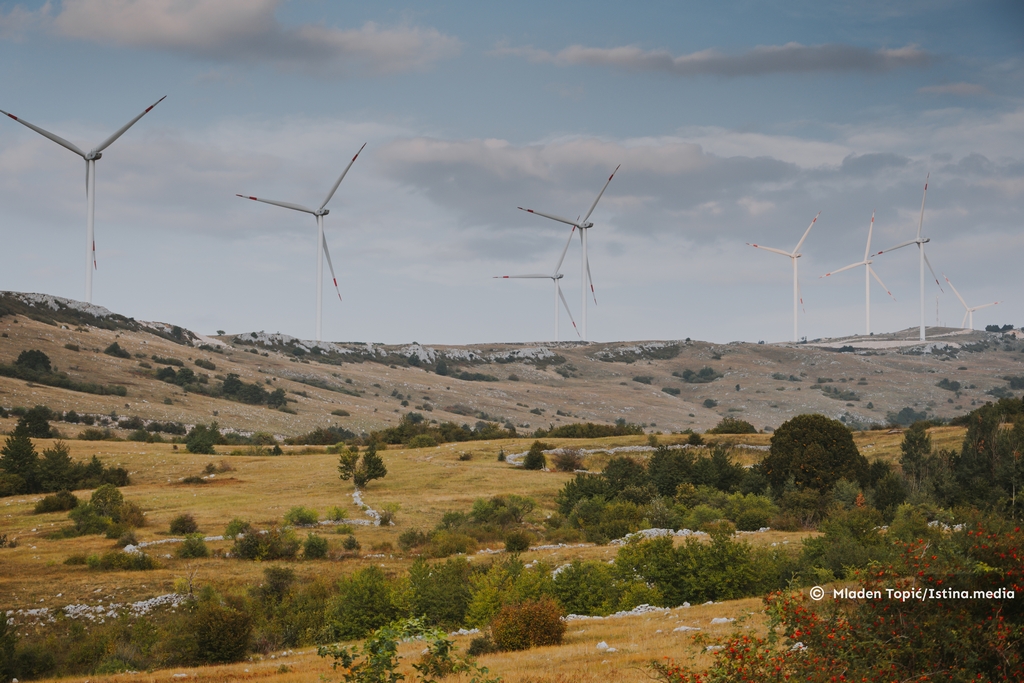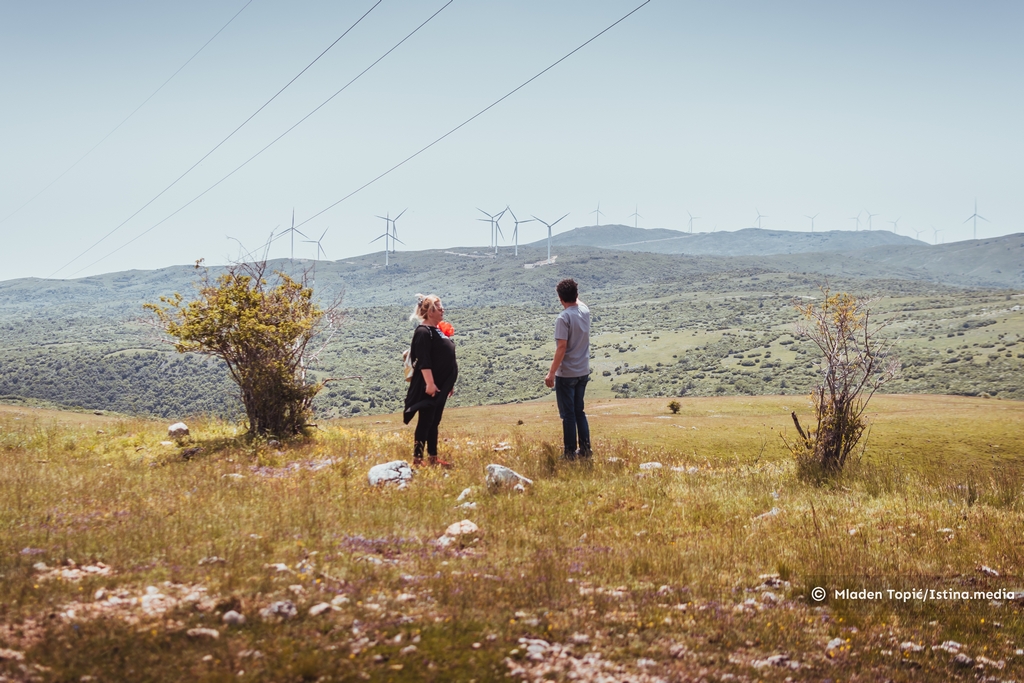
When we set out for this area, we ourselves were not aware of the extent of the invasion taking place here when it comes to wind and solar parks. In the draft spatial plan of the Herzeg-Bosnia County, as many as 28 wind farms are planned, 18 of which are located precisely in the municipality of Tomislavgrad, which we visited.
The livestock and wood-processing region of Tomislavgrad and Šuica could soon become known primarily for the quantity and concentration of energy projects. The fields of thyme and other medicinal herbs that grow here as if sown by hand, and whose scent reaches the depths of the soul, will be leveled by heavy machinery for road construction, followed by hundreds of thousands of cubic meters of concrete.
Written by: Kristina Perić / Photos and video: Mladen Topić
Even the Šuica River—said to be the most winding river in the world—cannot comprehend where all these wind turbines are coming from, or where the people have gone who once loved, prayed, and worked this land, nor where these new investors in concrete come from—capitalists interested only in profit.
28 wind farms, 18 planned in Tomislavgrad
When we set out for this area, we ourselves were not aware of the extent of the invasion taking place here when it comes to wind and solar parks. In the draft spatial plan of the Herzeg-Bosnia County, as many as 28 wind farms are planned, 18 of which are located precisely in the municipality of Tomislavgrad, which we visited.
If we know that turbines use hundreds of liters of oil in their main gearbox, and that in karst and environmentally sensitive areas such as the Duvno region the risk of leakage is particularly high and should be regulated, as well as that up to 400 cubic meters of concrete are poured into the foundation of a single turbine, it is clear that this area will not remain untouched as a result of these projects. The environmental impact has not been properly studied, yet the causes are already being built.
The local residents were also unaware of what was being prepared on their land, but once they saw it, they formed the initiative “Let’s Preserve the Duvno Region.”
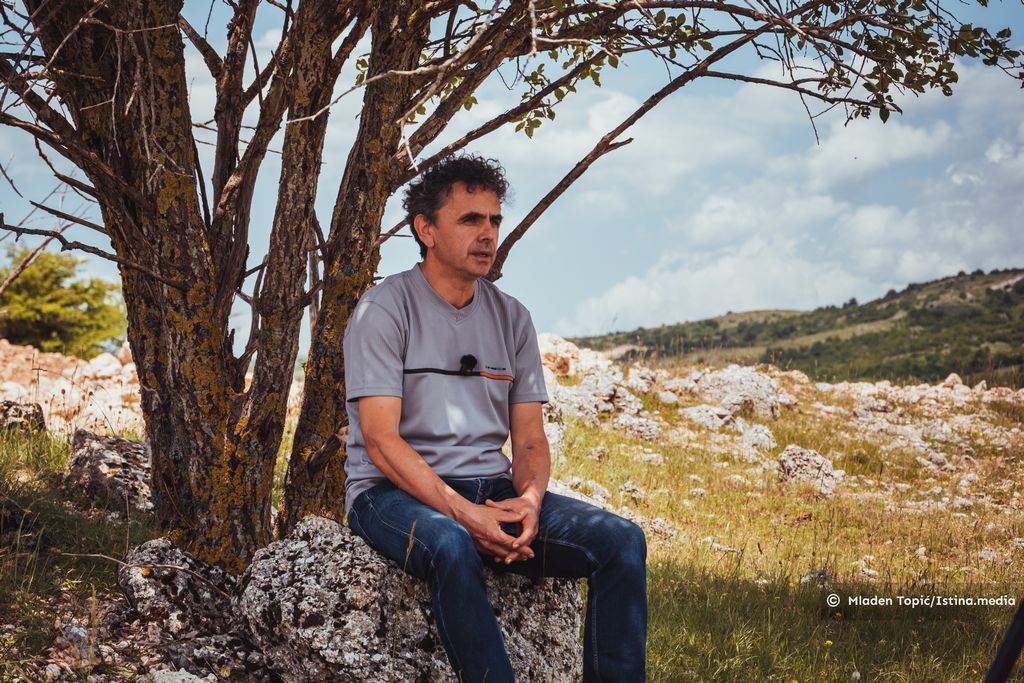
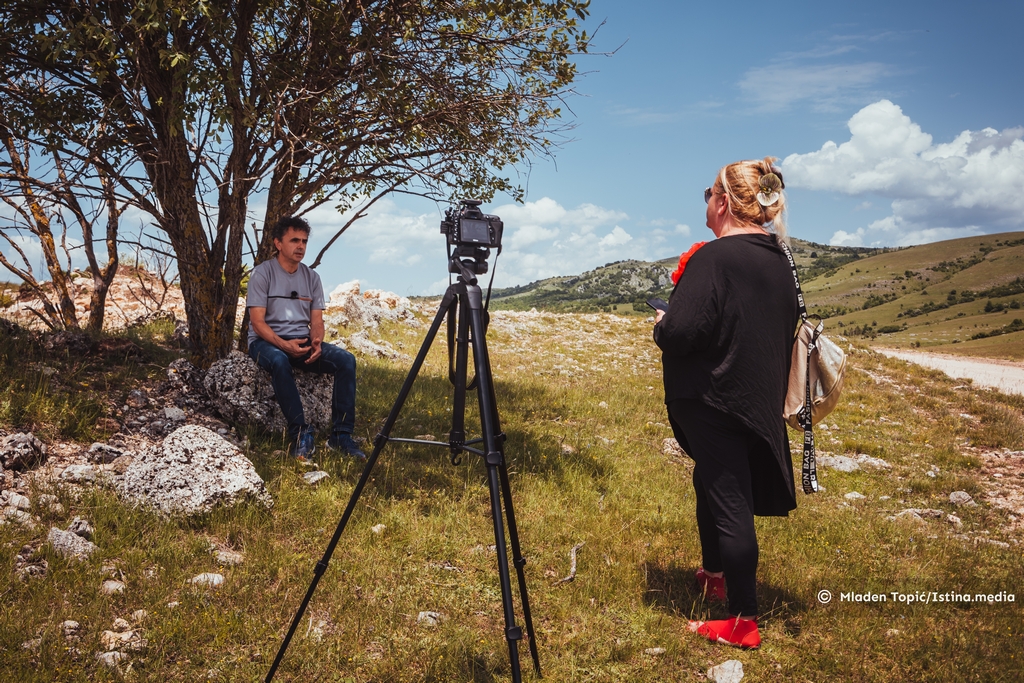
“Regardless of the fact that it’s only a draft of the spatial plan, quite a lot has already been done. We started taking action when we saw that it includes a total of 18 wind farms and two and a half thousand hectares of solar panels,” says Ivan Stanić, who appears to be first and foremost a local patriot, then a teacher at the Vocational School in Tomislavgrad and a representative of the Informal Citizens’ Group Let’s Preserve the Duvno Region.
The informal citizens’ group reported everything to the inspection authorities, filed lawsuits, and tried to gather information about the project owners.
“Whenever we asked—something we are legally entitled to—it was always avoided, muddled; nothing is done the way God commands,” he adds, and continues: “We couldn’t have dreamed of this. According to the spatial plan, they’ve mapped out all the hills around Duvno for wind farm construction, even Mount Vran”, says the professor.
If the government’s plans come true, the Duvno region will become a true energy colony, while the only open doors for the locals will be those leading to the EU.
On the gravel road toward a nearby wind farm, one statement particularly resonates — that the people of Šuica have, in a way, become like the Native Americans.
“The same thing happened to them as to the Indians in America when the Americans came. First, they wiped them out, and now the same thing is happening here — they’re grabbing for our land; whoever gets there first, it’s theirs”, Stanić continues.
The Chinese are buying up concessions
As we look over the Šuica area from a nearby hill, Stanić points out with his hand.
“This here is Ivovik — the investors are the Chinese. And what’s worst of all, our government is so incompetent that, even if they decided to lease this land, why did they have to look for resellers? Various middlemen are selling off Duvno’s land — they’re making money, while the local community will be left only with the consequences and no benefit”, says Stanić.
Below Ivovik, in Borova Glava, research is being carried out; the investors are domestic, but the locals believe that the concession will eventually be bought by the Chinese, whom they found on-site drilling something.
“We found out that the concession will probably be sold to the Chinese. That’s how they do it — they set up a company with about ten thousand marks of capital and then sell the concessions later, God knows to whom”, says Stipe Zrno, a resident of Šuica and also a member of the initiative.
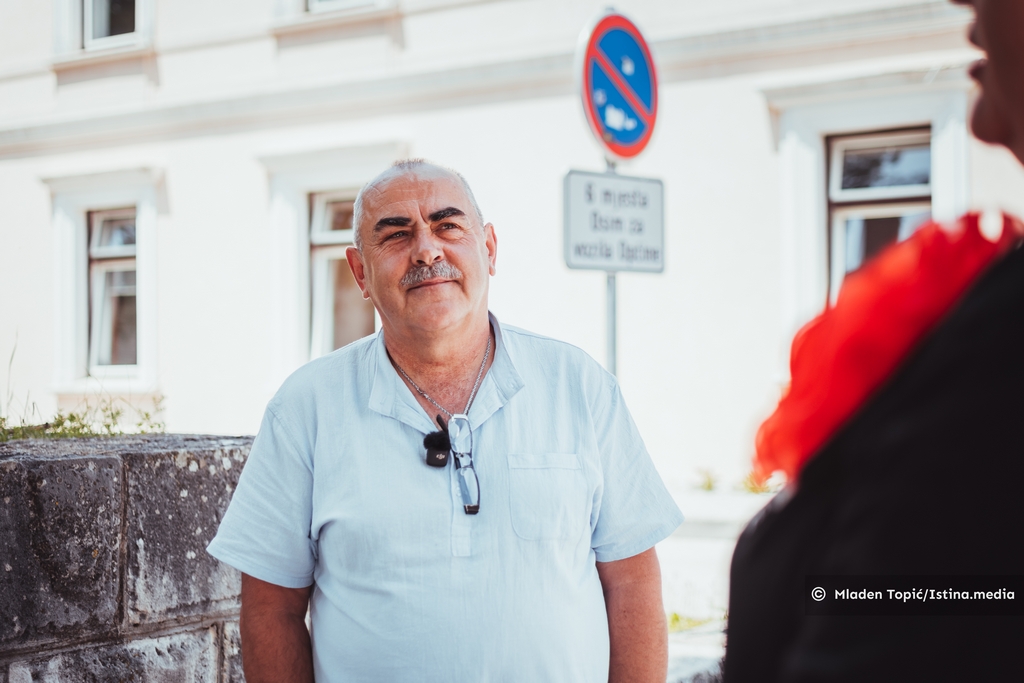
Like Stanić, he also points out that the residents have no access to information. He says they requested a list of investors but never received it.
“There’s always someone local who has a registered company and holds the concession, and then later that concession gets sold to someone else. The Chinese are even appearing as investors, so we simply don’t have access to information. We from the informal citizens’ group requested from the Municipality of Tomislavgrad and the Government of the Herzeg-Bosnia County access to all those concessions, but we were rejected by both”, explains Zrno, a war veteran and pensioner who has lived his whole life in Šujica.
Illegal roads and deforestation
The residents, therefore, know only what they can see from municipal and cantonal documents.
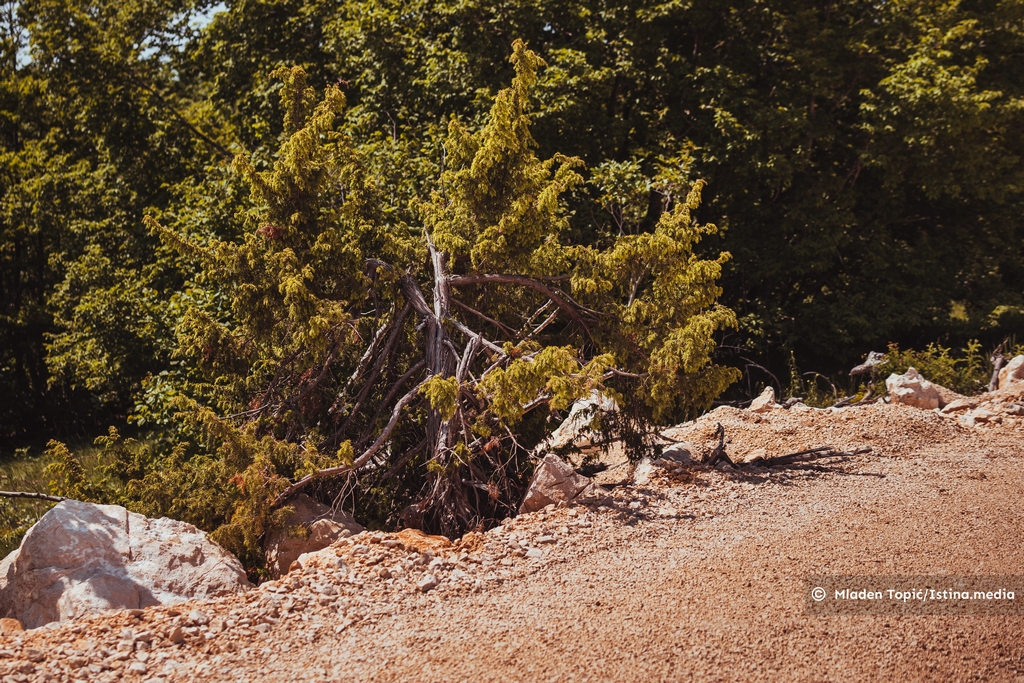
“Everything we know, we learned from the spatial plan — it’s still in draft form, but what’s even worse is that large-scale clearing is already underway based on that draft. Our investors, our so-called saviors, they can clear wherever they want. Just recently, a cousin told me that on this road (note: Baljci) they cut through his property to make a path, and he knew nothing about it. No one asked him. They don’t care who owns what — they just clear wherever it’s more profitable for them”, Stanić continues, adding: “Nothing is a problem for them. You can look up there now and see how the forest is being cleared unconstitutionally. The law of this country we live in strictly prohibits converting forest land into construction land — yet that’s exactly what they’re doing.”
The professor particularly emphasizes the problem of groundwater pollution and waste.
“After 5–6 years of use, those solar panels become radioactive. In all these projects, no one has taken into account or even knows where this waste will be disposed of, or what the remediation will look like. But our Municipal Council made sure to pass a decision that all that private equipment belonging to the concessionaires will become the property of our municipality. So that we can enrich ourselves with other people’s garbage”, says Stanić.
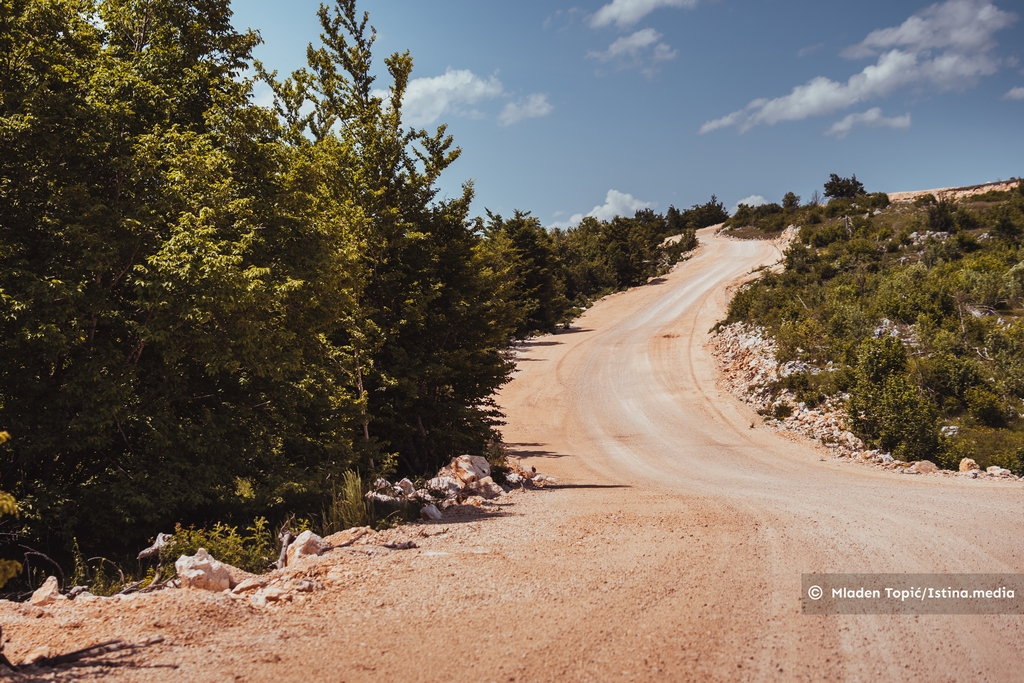
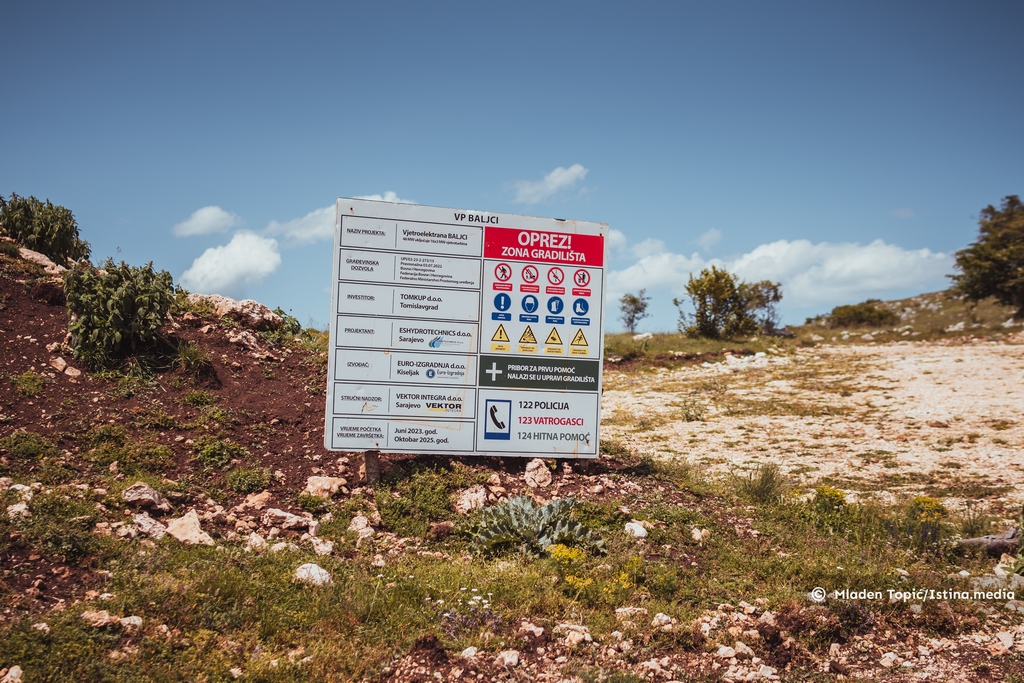
His village is located near the Baljci wind farm, where in some places machines have carved out roads up to ten meters wide, leaving trees hanging in the air — neither fully uprooted nor standing upright — caught between life and death. The same fate awaits those fields of thyme, whose scent, even as we write this text far from Tomislavgrad, still lingers in our nostrils.
Water pollution
Stanić believes that the impact of these energy projects could be felt all the way to Dalmatia.
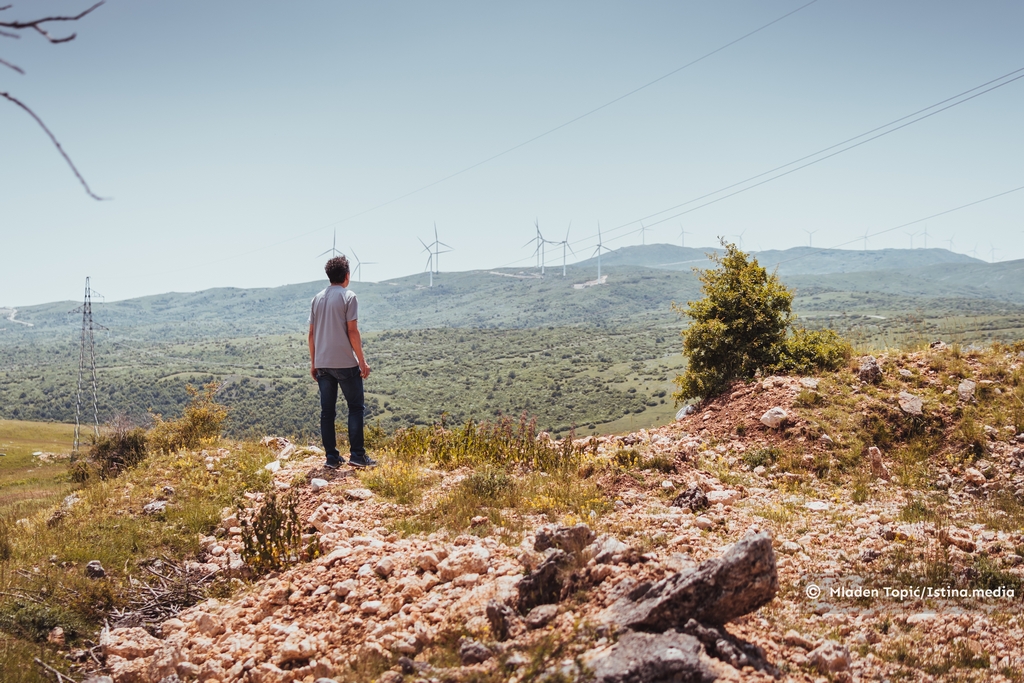
“We have researched the impact of such projects on groundwater, and Swiss and American studies have proven that there is no chance that these waters — especially in karst areas — will remain unpolluted after a certain period of exploitation of such projects, given the type of equipment that is installed. We have the first wind farm where the equipment used was much better than what’s being installed in the newer ones. It’s as if someone is sending us the biggest waste of equipment, and they can install it only here, because nowhere else in Europe would it be allowed”, says Stanić.
Indeed, Europe encourages the development of gearless turbines that do not use oil. The old turbines, which consume large amounts of oil, are gradually being phased out and replaced with more modern ones. Furthermore, environmental standards are being tightened — particularly regarding the disposal of waste oil, the control of leaks, and inspections aimed at preventing soil and groundwater contamination. In our case, however, that remains a distant dream. If we look at how investors obtain concessions and permits, and how closely they are followed by those in power, it becomes clear that inspections will not be doing much. On the other hand, the wind farms in the Duvno region are approaching the very sources of the rivers.
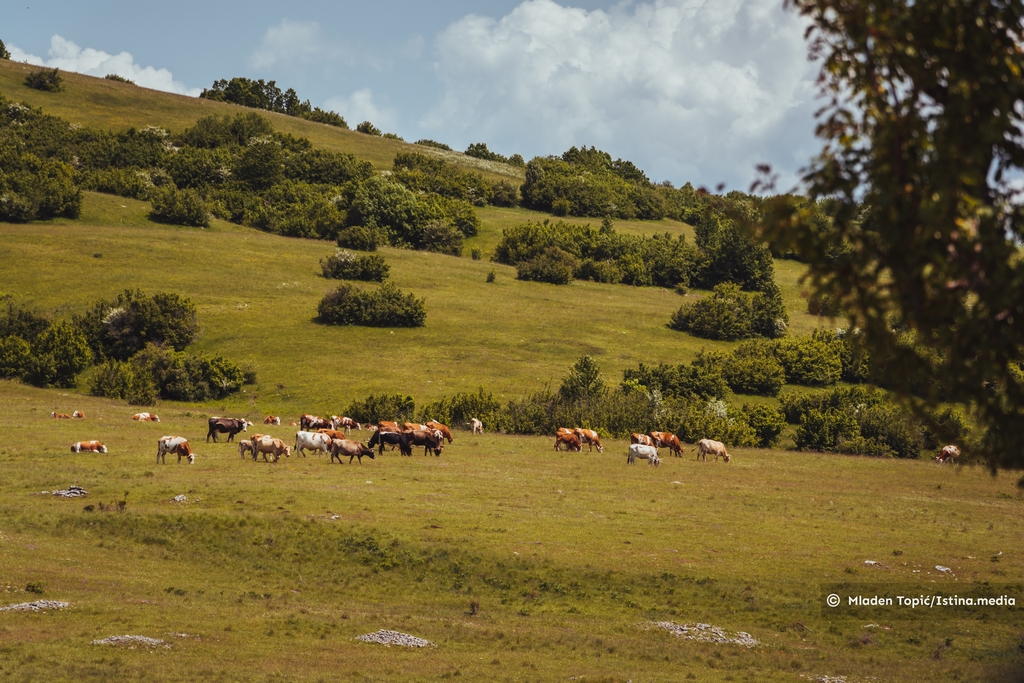
“Everything will be connected — according to the spatial plan, they want to link it all together, even over there in Crvenice. It’s as if they’re drawn to groundwater, as if they’re poking around for something down there. There’s a beautiful picnic area called Studena, down at the bottom of the Duvno field, with magnificent water springs — but all of that has already been marked for pollution. I don’t know what they’re drinking, but they obviously believe that water doesn’t matter to us”, the professor emphasizes.
When asked whether any other county in the region has as many energy projects, our interlocutors reply: “Nowhere in the world — not even in Africa — is this allowed, especially not in karst areas. For experts who study karst regions, this is unimaginable. The local population gains nothing, but will bear all the consequences.”
The residents emphasize that this is not a battle against windmills, and that they are not against green energy, but that they cannot accept the way this invasion of their region is being carried out — particularly the devastation, the environmental impact, and the disregard for the will of the local population.
In the second part of the article, coming tomorrow, read about how these projects will affect livestock farmers in the region, whether proper public consultations were held before these projects, which laws the authorities are violating in implementing them, and whether we will receive any answers to our inquiries about the investors.
Istina.media (12.6. 2025.)